


As humans, we often think of space as something vast and infinite, but did you know that even the tiniest particles that make up our world are mostly empty space? At the atomic level, matter is composed of atoms that are 99% empty space. This may seem paradoxical, but it highlights the incredible complexity and interconnectedness of our universe.
Atoms are the building blocks of matter, and their structure is essential to understanding the physical world around us. At the heart of every atom is a nucleus made up of positively charged protons and neutrally charged neutrons, surrounded by negatively charged electrons that orbit around the nucleus. While the nucleus accounts for most of the atom’s mass, it takes up a tiny fraction of the atom’s overall volume.
This means that if you were to zoom in on an atom, you would see that it is mostly made up of empty space. In fact, if you were to remove all the empty space from the atoms that make up every human on Earth, the entire world’s population could fit into the size of a sugar cube.
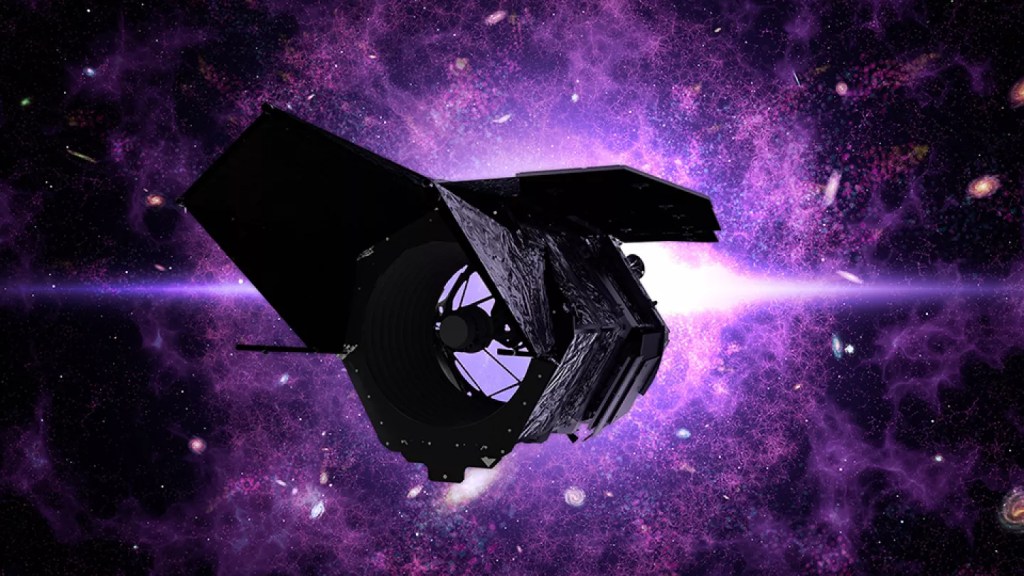
But how does this relate to outer space? Just like atoms, outer space is also mostly empty. The vacuum of space is a near-perfect vacuum, which means that it has extremely low pressure and density. In fact, the density of space is around one hydrogen atom per cubic meter, making it even emptier than the inside of an atom.
The similarities between the emptiness of atoms and outer space may seem like a coincidence, but they are connected by the fundamental principles of physics. The laws of physics apply equally to the macroscopic world of outer space and the microscopic world of atoms.
Moreover, the atom’s 99% void is not really “empty.” It’s filled with a complex system of quantum fields that are responsible for the behavior of particles and matter. These fields are invisible to the naked eye, but they exist everywhere, including in the vast expanse of space.
The atom’s 99% void also has implications for our understanding of the universe. Since atoms are mostly empty space, the matter we see around us is actually a manifestation of energy. This energy can be converted into matter and back again, as demonstrated by nuclear reactions and particle accelerators.
This relationship between energy and matter is also key to understanding the origins of the universe. In the moments following the Big Bang, the universe was filled with a primordial soup of energy and particles. As the universe expanded and cooled, this energy condensed into matter, forming the building blocks of galaxies, stars, and planets.
In conclusion, the atom’s 99% void is a fascinating phenomenon that reveals the interconnectedness of the universe. From the emptiness of atoms to the emptiness of space, the laws of physics apply universally, reminding us that we are all made up of the same fundamental building blocks. The next time you look up at the stars or down at your hand, remember that the space within is just as important as the matter that fills it.
 Immersion Imagery 360
Leave a comment