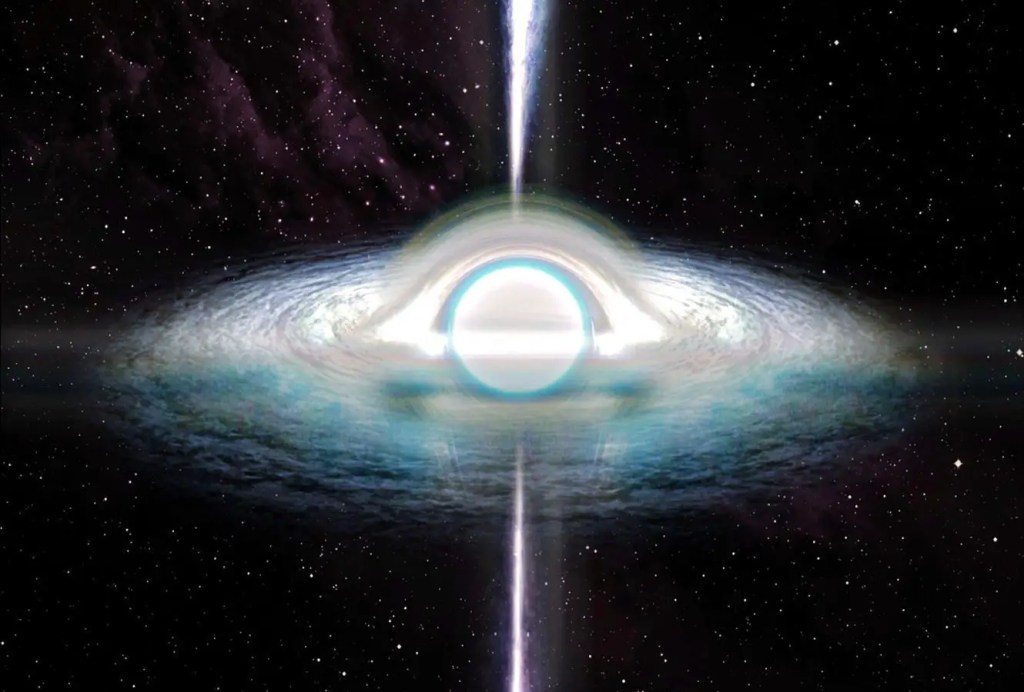


The universe is full of mysteries, and the concept of a white hole is one of them. A white hole is a hypothetical object that has been proposed as the opposite of a black hole. While black holes absorb everything, including light, a white hole is thought to emit everything, including matter and energy, into space. The idea of a white hole has been around for over a century, but it remains a topic of debate among scientists.
One fascinating aspect of the white hole theory is its potential to represent a new beginning. Just as a black hole is associated with the end of something, a white hole could be seen as the start of something new. This concept has a profound connection to the ancient Egyptian concept of ma’at, which is the principle of balance and order that underlies the universe.
The idea of ma’at is intimately tied to the concept of cycles, particularly the cycle of life and death. The ancient Egyptians believed that death was not an end but a transition to a new state of being. The concept of a white hole as a source of new energy and matter can be seen as a scientific interpretation of this idea of beginning again.
But what does this have to do with Egyptian math? The answer lies in the study of ancient Egyptian geometry, which was closely tied to the concept of ma’at. The Egyptians saw geometry as a way to bring order and balance to their world, and they used it extensively in their architecture and art.
One particularly interesting example is the construction of the Great Pyramid at Giza. The pyramid’s shape is incredibly precise, with each side measuring exactly 755.765 feet in length. This precision was achieved through the use of advanced geometry, which allowed the ancient Egyptians to create a monument that still stands today.
The connection between ancient Egyptian math and the concept of a white hole may seem tenuous, but it speaks to the interconnectedness of all things. The universe is a vast and complex place, and our understanding of it is constantly evolving. The more we learn about the mysteries of the universe, the more we see how everything is connected.
In conclusion, the theory of a white hole represents a fascinating area of study for scientists and philosophers alike. Its potential to represent a new beginning speaks to the human desire for renewal and regeneration. When we look at the white hole theory in the context of ancient Egyptian math and the concept of ma’at, we see how everything in the universe is connected, and how the search for knowledge and understanding can reveal profound truths about our world and ourselves.
 Immersion Imagery 360
Leave a comment