
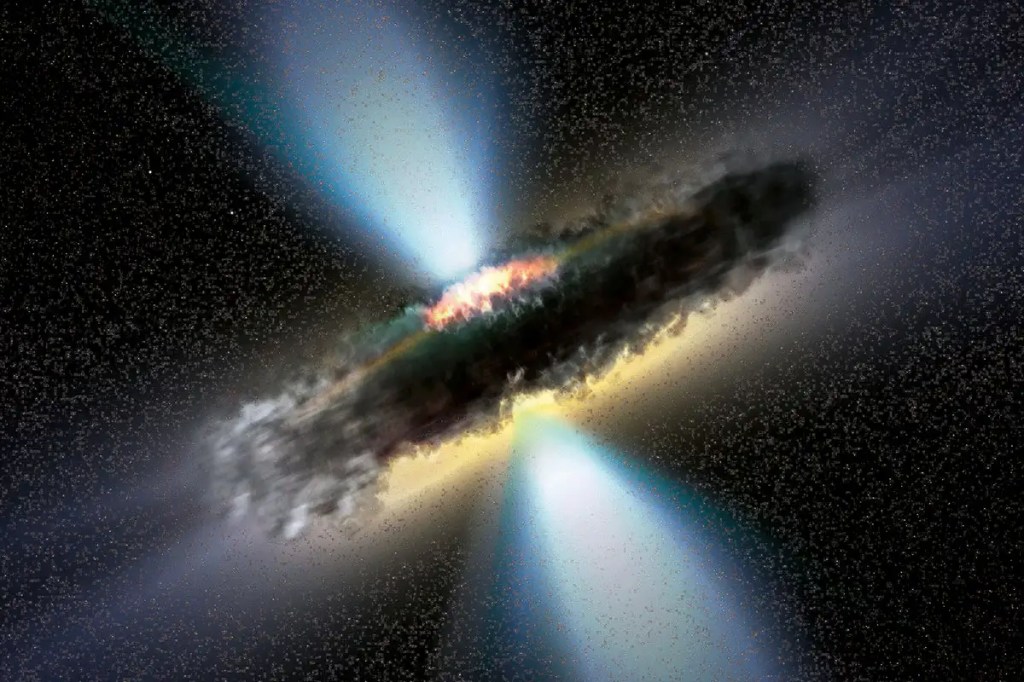


The concept of a white hole is a fascinating and complex one, and it has been a topic of interest among physicists and cosmologists for decades. While the idea of a white hole remains purely theoretical, it has captured the imaginations of many who seek to understand the mysteries of the universe. In this blog post, we will explore the theory of a white hole in relation to the idea of beginning again.
First, let’s define what a white hole is. According to theoretical physics, a white hole is a hypothetical region of space-time that exists as the exact opposite of a black hole. While a black hole is a region of space-time from which nothing can escape, a white hole is a region from which nothing can enter. In other words, a white hole is a region where matter and energy can only escape and not enter.
The idea of a white hole was first proposed in the 1960s by physicist John Wheeler. He suggested that a white hole could be thought of as the opposite of a black hole, with matter and energy emerging from it rather than being sucked into it. The concept of a white hole is intriguing because it challenges our understanding of the nature of space-time and the universe.
One of the most fascinating aspects of the theory of a white hole is its relationship to the idea of beginning again. Some scientists and philosophers have speculated that a white hole could be the point of origin for a new universe. This idea is based on the concept of the Big Bang, which suggests that the universe began as a singularity and expanded rapidly from there. If a white hole were to exist, it could be the point where the singularity emerged, leading to the creation of a new universe.
Another fascinating aspect of the theory of a white hole is its potential to explain some of the mysteries of the universe. For example, some scientists have speculated that the high-energy particles known as cosmic rays could be the result of matter and energy escaping from a white hole. Others have suggested that a white hole could explain the existence of dark matter, which makes up a large portion of the universe but cannot be directly observed.
Despite its intriguing potential, the theory of a white hole remains purely theoretical. No white holes have ever been observed, and there is no direct evidence to support their existence. However, the possibility of their existence continues to fascinate and inspire scientists and cosmologists around the world.
In conclusion, the theory of a white hole is a complex and intriguing one that challenges our understanding of the nature of the universe. While it remains purely theoretical, the idea of a white hole offers a glimpse into the mysteries of space-time and the potential for new beginnings. As scientists continue to explore the universe and uncover new insights, the theory of a white hole will likely remain a topic of interest and speculation for years to come.
 Immersion Imagery 360
Leave a comment